
National Highlights: February 2026
Innovation in Action
Each month, we celebrate the stories of Innovation Accelerator teachers and students making a difference across Indiana and beyond. This is the beyond!
Quick Hits:
NOVA Lab students took second and third place at Drexel University's Rising Starters High School Pitch Competition.
Ten NOVA Lab students now have a 1-on-1 mentorship program with entrepreneurship students at Ursinus College, running through late April.
A Texas homeschool cooperative built a full shadow puppet theater from scratch — plywood, power saws, parchment paper, and all — then filmed, recorded, and edited a complete production.
NOVA Lab Goes Big at Drexel And Acquires Ursinus Mentorship
Pennsylvania: Garreth Heidt at Perkiomen Valley High School
By late January, NOVA Lab students at Perkiomen Valley High School had already pitched to external organizations twice, delivered at least four more presentations to peers, and were deep into developing their ideas. So when five teams stepped onto the floor at Drexel University's Rising Starters High School Fast Pitch Competition, they were ready.
The format was unforgiving: no more than two minutes, no notes, minimal questions. It's a pure test of preparation and presence. And NOVA Lab walked away with second and third place, plus $250 total in prize money.
Watch NOVA Lab's Drexel pitch competition recap here.
The second-place team developed Vocal ID, a tool designed to promote belonging by giving students and staff access to real-time audio recordings of how to correctly pronounce a student's name — recorded by parents or family members. It's a project rooted in a simple but meaningful insight: getting someone's name right matters.
Third place went to the creator of The Velvet Hammer, a comic book designed for any kid who has ever sat in a crowded hallway feeling invisible. The story is a reminder that they, too, can be a hero. This one was a solo effort, the work of a single student-artist with a clear vision and the commitment to see it through.
For teacher Garreth Heidt, the results weren't surprising. The secret, he said, was time and repetition.
"We had more time to develop our ideas. But the amount of practice NOVA Lab students have had at pitching by late January clearly put them ahead of the other teams."
Students echoed that sentiment in their own reflections. The second-place team noted the chance to connect with Drexel staff and students to learn about their innovation processes. The third-place finisher appreciated the “welcoming feeling from members of my school during the competition.“ Even the fourth-place finisher found value: "I had a good time with my friends and experiencing real-life presenting in a college."
That's the culture Heidt has built. One where placing matters less than growing, and where every student leaves with something.
A College Partnership Built on Years of Trust
The Drexel competition was just one chapter in a busy stretch for NOVA Lab. Around the same time, Heidt launched something he's been building toward for years: a formal 1-on-1 mentorship program with Ursinus College's U-Imagine Center.
The partnership didn't happen overnight. Heidt first met the director of U-Imagine about four years ago. It took time, and a growing relationship built through Heidt's service as a judge at the Ursinus Bear HS Pitch Competition, to find the right structure. Last year, 43 NOVA Lab students traveled to Ursinus for on-site presentations. It was energizing, but one-to-one mentorship wasn't feasible at that scale.
This year, the numbers aligned. Ten students are now matched with Ursinus entrepreneurship students for individual mentorship sessions running through late April. The first meeting with mentors was set for March 6, with two additional check-ins to follow.
Heidt is clear-eyed about what he hopes students gain.
"Of course, I hope my students get the kind of feedback and insight that helps them grow their projects more quickly. However, we also hope we get time to query our mentors on the projects they are working on and perhaps we can contribute to their projects as well."
That reciprocity is part of what makes the partnership meaningful. NOVA Lab students want to go beyond receiving mentorship and show up as peers, with ideas and insights of their own to offer.
It's a dynamic that former NOVA Lab student Julia Killar, now doing public health work in Sierra Leone, would recognize. When she returned to speak to students in January, she reflected that NOVA Lab gave her more practice with public speaking than any other class. Heidt's current students seem to be on the same track, stepping into bigger rooms, and rising to the occasion every time.
Learning By Creating A Shadow Puppet Play
Texas: Doctor Erin Flynn at Hedge School Cooperative
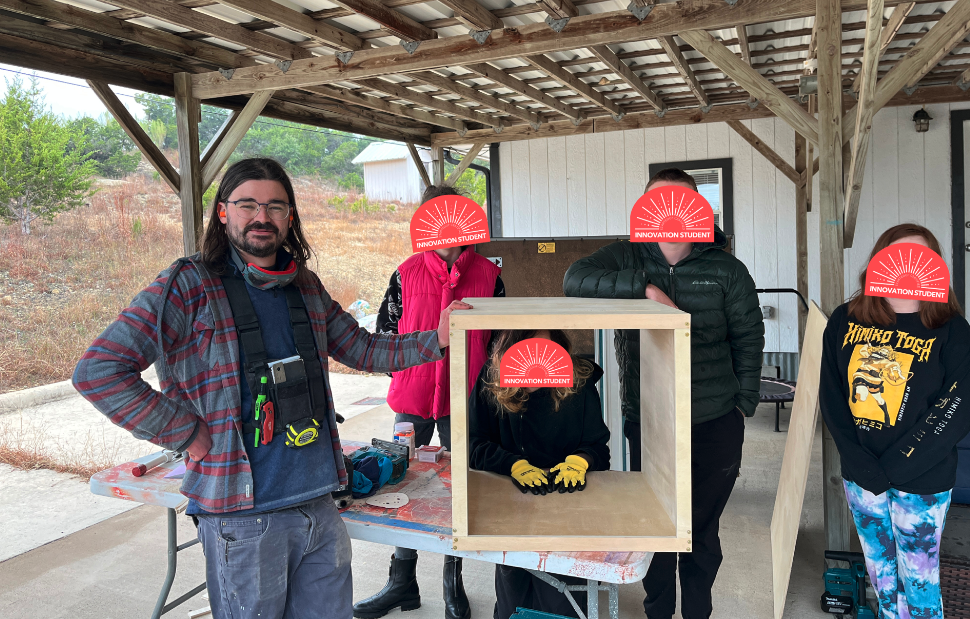
At Hedge School Cooperative in Texas, a small group of students just finished something that's hard to put in a single category. It's part woodshop, part sound studio, part storytelling, part film production… and it all started with a DND adventure about grief, monsters, and finding the hero in yourself.
Six of Dr. Erin Flynn's students participated in creating a shadow box to preform a play with one of Flynn’s former students, Dub.
Dub is now a professional carpenter who works on film sets, he donated all the materials and came in to lead the construction. Students measured and cut the four sides of the shadow box, then used a second saw to cut slots in the top for puppet movement.
They assembled everything with drills and screws. Even the most reserved students picked up the tools and gave it a try. A senior student, Hugh, finished the build by crafting the shadow screen itself, stapling parchment paper across the front.
At Hedge School Cooperative in Texas, a small group of students just finished something that's hard to put in a single category. It's part woodshop, part sound studio, part storytelling, part film production… and it all started with a DND adventure about grief, monsters, and finding the hero in yourself.
Six of Dr. Erin Flynn's students participated in creating a shadow box to preform a play with one of Flynn’s former students, Dub.
Dub is now a professional carpenter who works on film sets, he donated all the materials and came in to lead the construction. Students measured and cut the four sides of the shadow box, then used a second saw to cut slots in the top for puppet movement. They assembled everything with drills and screws. Even the most reserved students picked up the tools and gave it a try. A senior student, Hugh, finished the build by crafting the shadow screen itself, stapling parchment paper across the front.
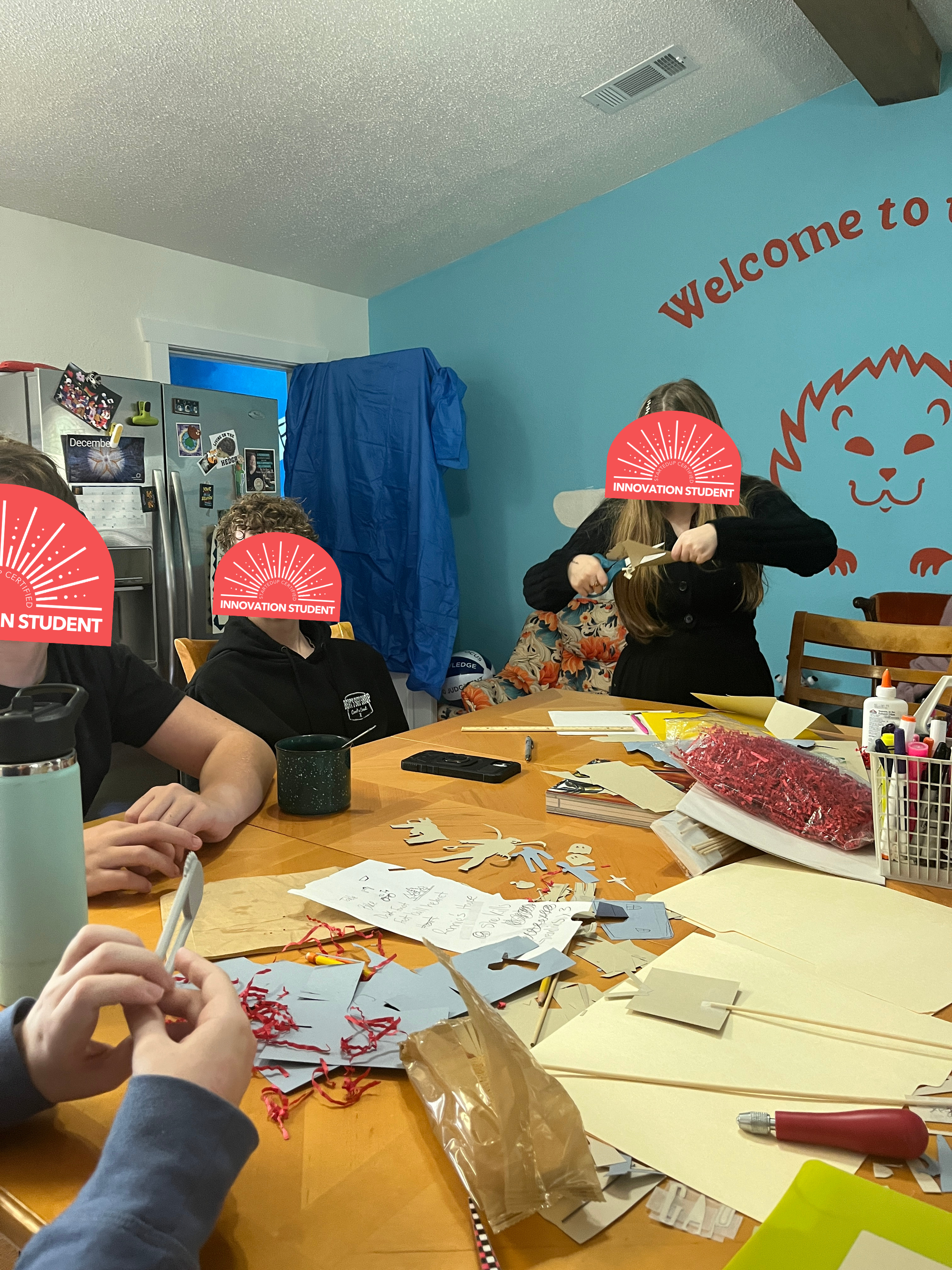
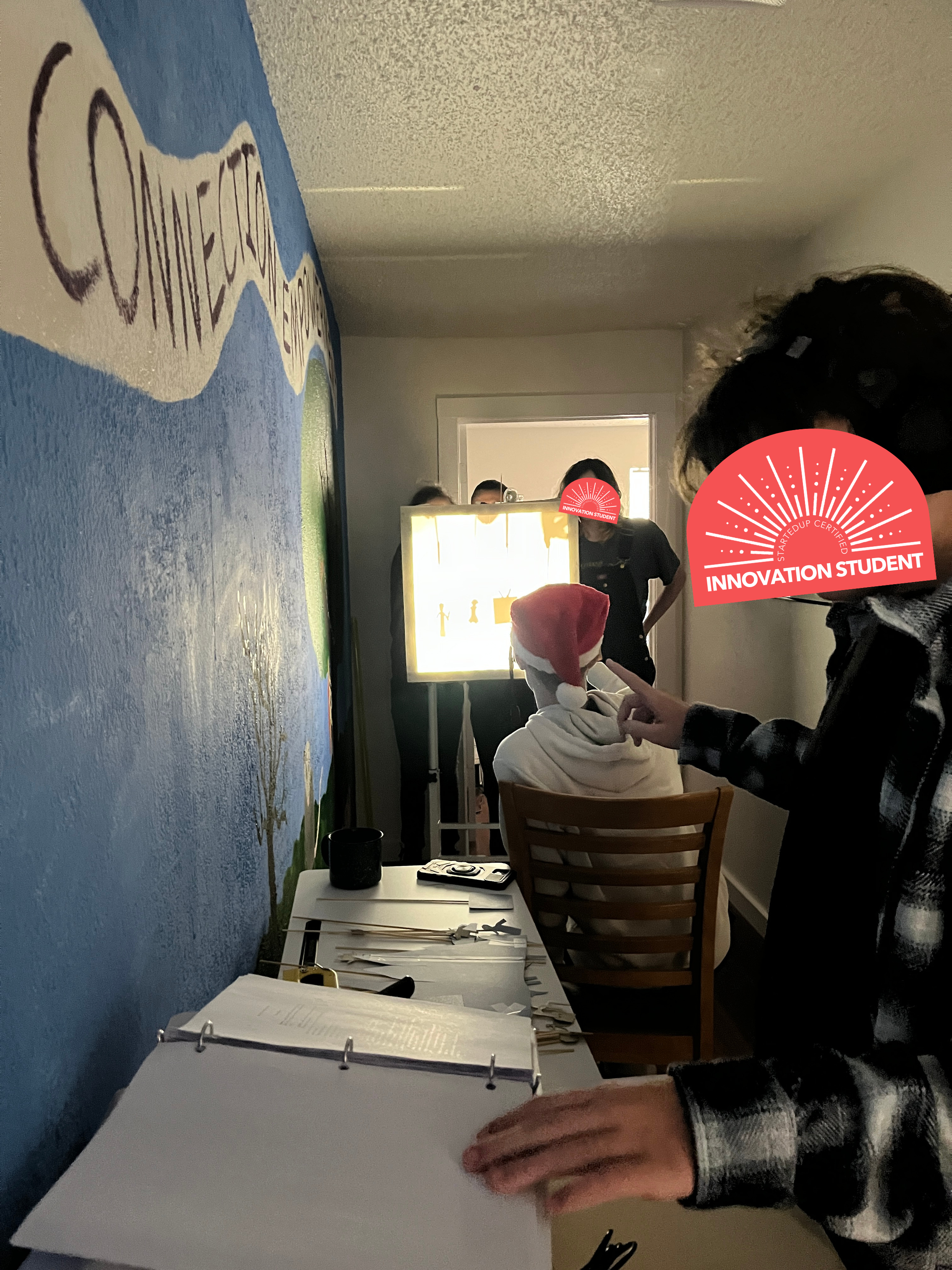
"The students have invited him to our premiere in March," Flynn noted, a detail that says a lot about how the day felt!
But the build was only the beginning. What followed was a full production process. Students converted a science classroom closet into a sound booth to record the voice track. They ran camera, coordinated lighting, managed puppets, and dealt with what Flynn described, with characteristic warmth, as "arm cramp." Once the footage was captured, the senior students took over editing and laid the voice track over the video.
And Hugh didn't stop there. The skills they built through editing have since carried into original music composition.
The story itself, a DND-inspired adventure about dealing with grief and overcoming monsters, was student-written and student-performed. Flynn called the experience "quite a feat," and the range of skills students developed backs that up: woodworking, tool safety, audio recording, filmmaking, editing, storytelling, and collaboration, all woven together into a single project.
The premiere is scheduled for March, and Dub will be in the audience.
For Flynn, that circle - former student, now professional, now mentor - is exactly what this kind of learning is supposed to look like.