
Northern Indiana: January 2026
Innovation In Action
Each month, we celebrate the stories of Innovation Accelerator teachers and students making a difference across Indiana and beyond.
Quick Hits:
Students secured four city-owned lots to sustain a decades-long Building Trades program, ensuring continued hands-on construction learning.
Students expanded their perspective through a global exchange with Japan while navigating the realities of opportunity, hesitation, and growth tied to real-world partnerships.
Building Trades Secures Its Future
Ben Modlin: Mishawaka High School
For Ben Modlin, the future of Mishawaka High School’s Building Trades Program recently became much more secure.
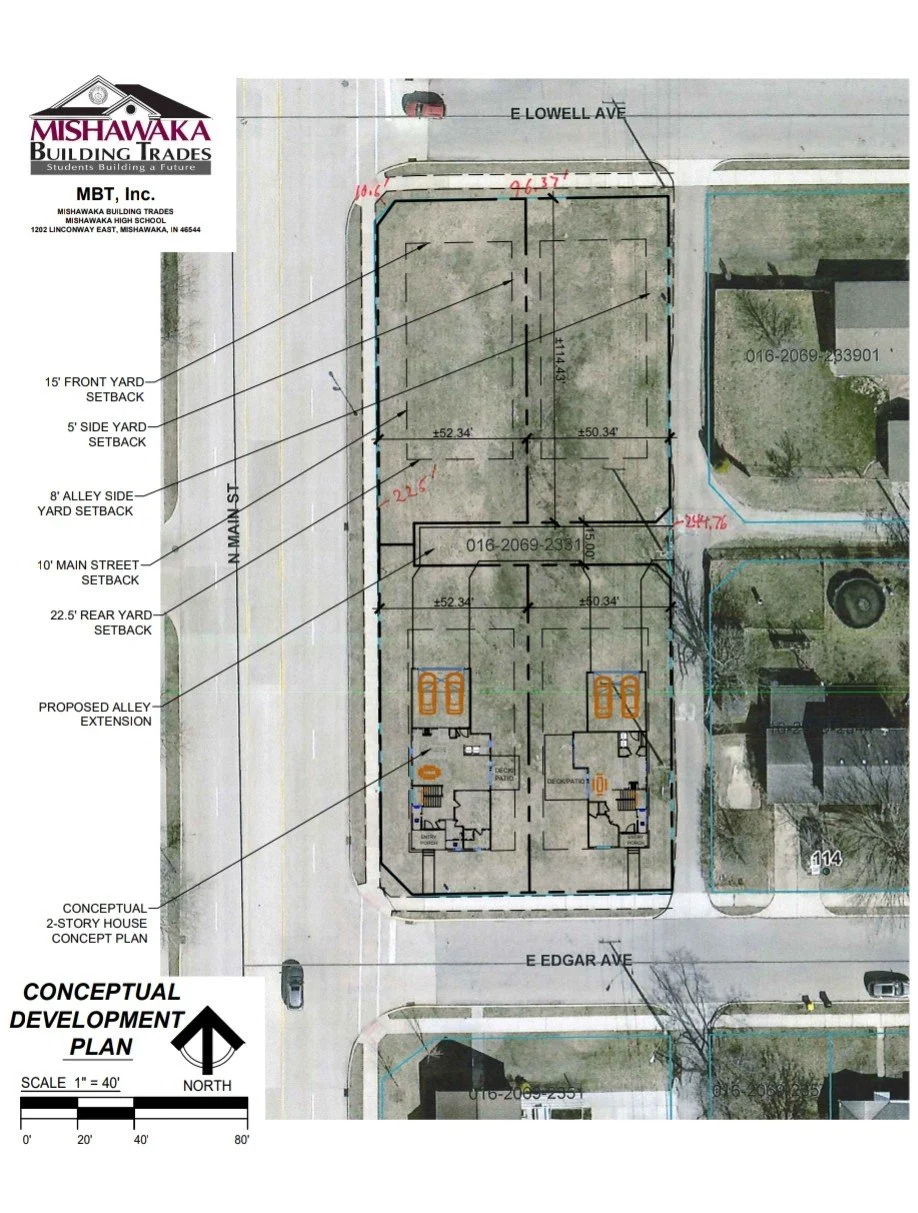
Modlin, the head for Mishawaka High School’s Industrial Technology Department and Treasurer of the Mishawaka Building Trades Program, met with the mayor and city leadership to discuss the program’s long-term needs. That conversation resulted in a major commitment from the City of Mishawaka: four city-owned lots designated specifically for student-built homes.
Since 1979, the Mishawaka Building Trades Program, a 501(c)(3) nonprofit, has given students the opportunity to construct single-family homes within the school district. Students work alongside industry professionals and are involved in every phase of the build, from foundation to finish.
But Mishawaka’s geography has always presented a challenge.
The school corporation spans just eight square miles and is largely landlocked, making it difficult to secure buildable lots year after year. Without land, the program itself is at risk. The city’s decision to partner with Building Trades addresses that challenge directly.
The four lots will be developed as what the city has named the Mishawaka Building Trades Subdivision, providing enough space to sustain the program for approximately four more years.
“We are grateful to our Mayor and the city of Mishawaka for their continued commitment and dedocation to our program,” Modlin said.
The program’s strength also comes from the team behind it. Building Trades teacher Dennis Murphy has brought decades of construction experience into the classroom and onto job sites, strengthening both instruction and community trust. At the same time, Year 1 and Year 2 teacher Kylie Pixley has expanded the program’s offerings as enrollment and interest have grown.
“The three of us working together is the reason for our success,” Modlin shared.
Together, the instructional team, city leadership, and industry partners have built a model that works, one that allows students to gain real skills while contributing tangible value to their community. With land secured and partnerships in place, the Mishawaka Building Trades Program can continue doing what it has done for more than four decades: preparing students for careers by giving them real responsibility and real work, right here at home.
A Trip to Japan
Carissa Lahrman: AMP Lab at ElectricWorks
At AMP Lab inside Electric Works, students are surrounded by possibility like cutting-edge tools, creative freedom, and access to real-world partners. For Carissa Lahrman, the work has always been about helping students see those possibilities and learn how to step into them.
This summer, she is taking that work halfway across the world.
Carissa was selected to travel to Japan through the Fort Wayne Sister Cities International Student Exchange Program, where she serves as the program’s administrator. The experience is funded by the Howard Chapman and the late Betsy Chapman’s Chapman Student Exchange Fund, which provides scholarships covering approximately 85% of the student cost, making global travel accessible to students who might not otherwise have the opportunity.
Takaoka, Fort Wayne’s sister city, operates a similar scholarship-supported program for its students, reinforcing the exchange as a truly reciprocal experience. This summer, six students from Fort Wayne and Allen County will travel to Japan, accompanied by a chaperone, while five students from Takaoka will come to Fort Wayne as part of the exchange.
Lahrman’s role on the trip will be focused on evaluation, observing the experience through the lens of an exchange ambassador as the program audits and refines its structure for the next two exchange cycles, beginning with Japan.
The itinerary is immersive and intentionally full. Students will travel from Tokyo to Mount Fuji, Kyoto, and Kanazawa before arriving in Takaoka. Along the way, they’ll participate in sightseeing tours, visits to temples and shrines, Japanese language lessons, and hands-on cultural experiences like candy making. Once in Takaoka, students will spend two weeks living with host families, gaining firsthand exposure to daily life, customs, and perspectives far beyond the classroom.
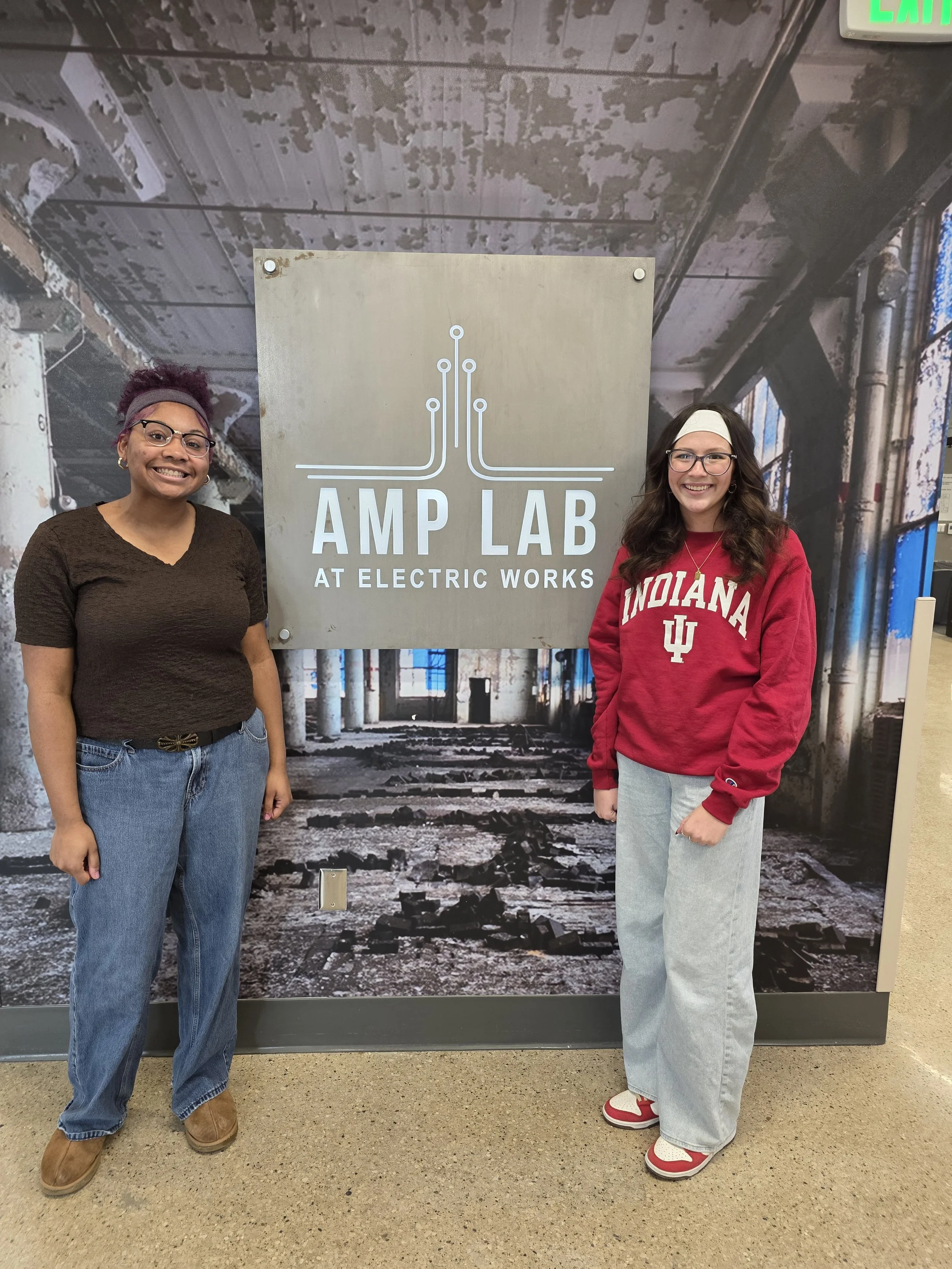
Two AMP Lab students (as seen on the left) will be among those selected to participate, bringing the experience full circle.
For Lahrman, opportunities like this directly feed back into her work at AMP Lab. “When students see the world differently, they come back different,” she explained. “It changes how they think, how they problem-solve, and how they see themselves.”
That belief in experiential learning is what drives her work closer to home.