
Central Indiana: January 2026

Innovation In Action
Each month, we celebrate the stories of Innovation Accelerator teachers and students making a difference across Indiana and beyond.
Quick Hits:
Nearly 80 students from five Central Indiana high schools gathered at 16Tech to pitch business ideas, receive mentor feedback, and build confidence through a collaborative practice competition.
A Westfield student launched CleanoutCashin, a professional garage cleanout service, in under 30 days through market research, mentorship, and rapid execution.
Practicing the Pitch, Together
Sarah Ackerman: Speedway High School
Jeff Edge: Purdue Polytech High School Lab
Reuben Benzel: Herron High School
Meredith Bryant: Walker Career Center
Sonia Walker & Warren Wallace: McKenzie Career Center
Photos courtesy of Greg Ash and Mark Harsley
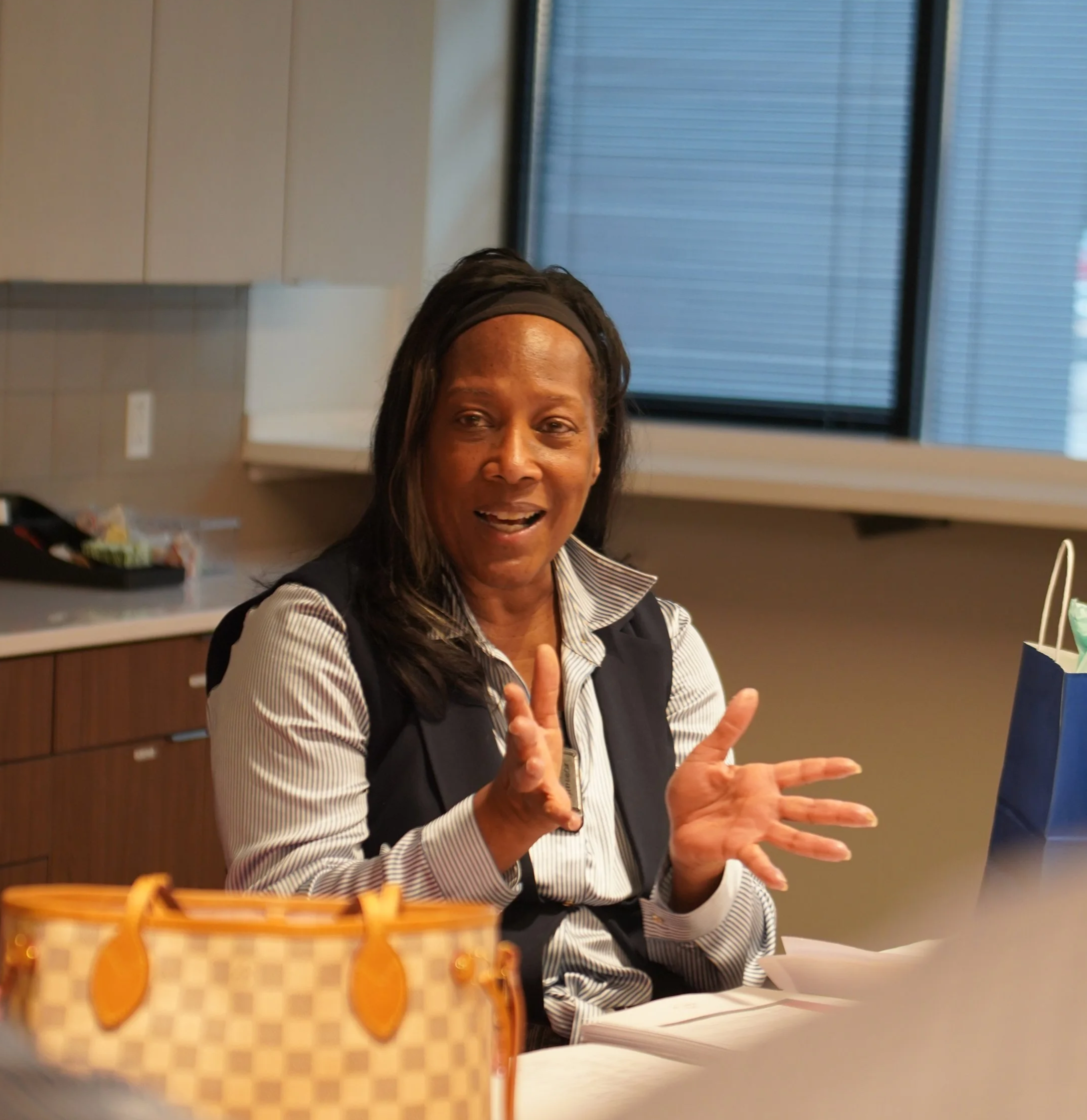
In January, students from across Central Indiana gathered at 16Tech for something intentionally low-stakes and deeply valuable.
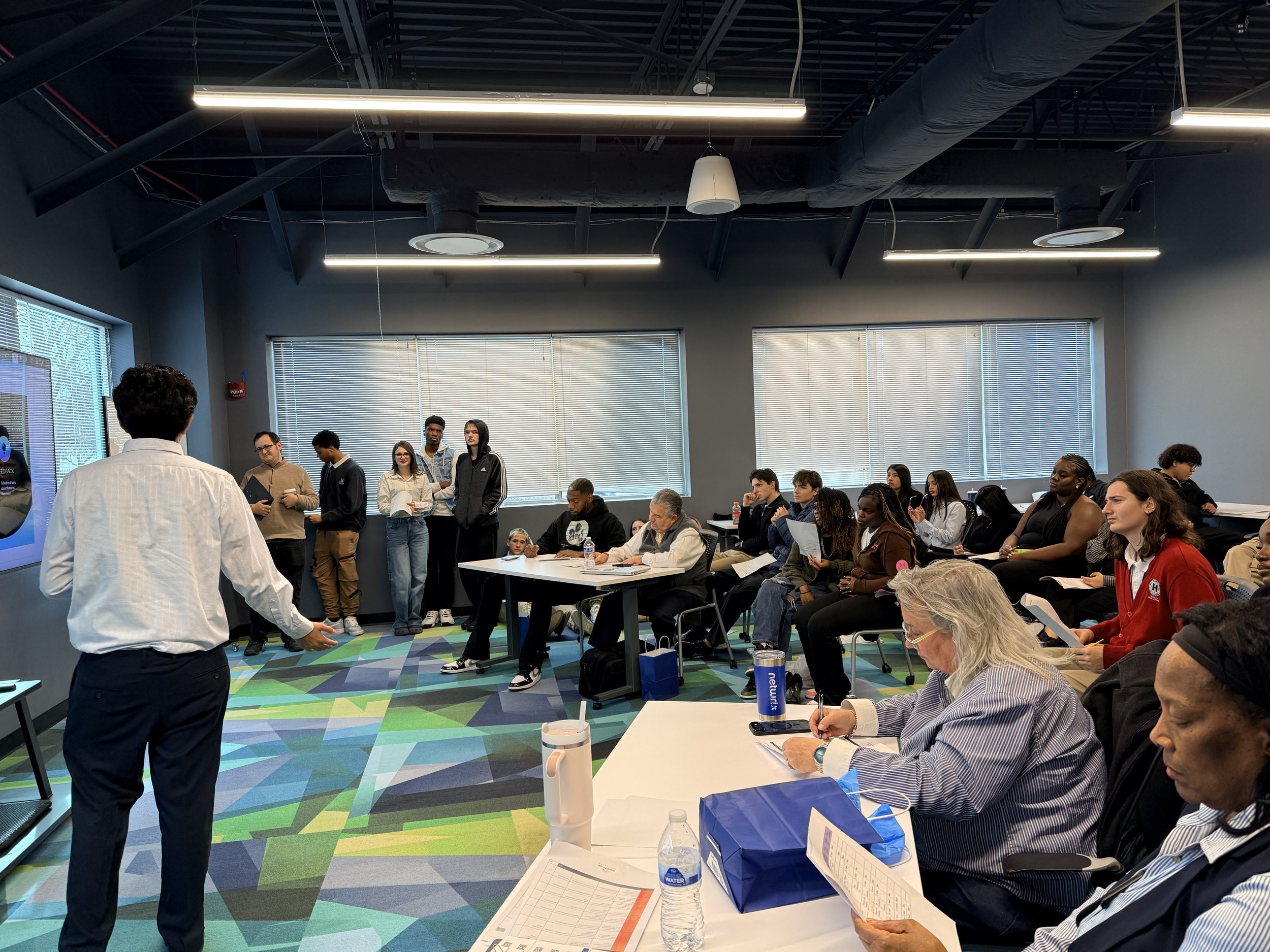
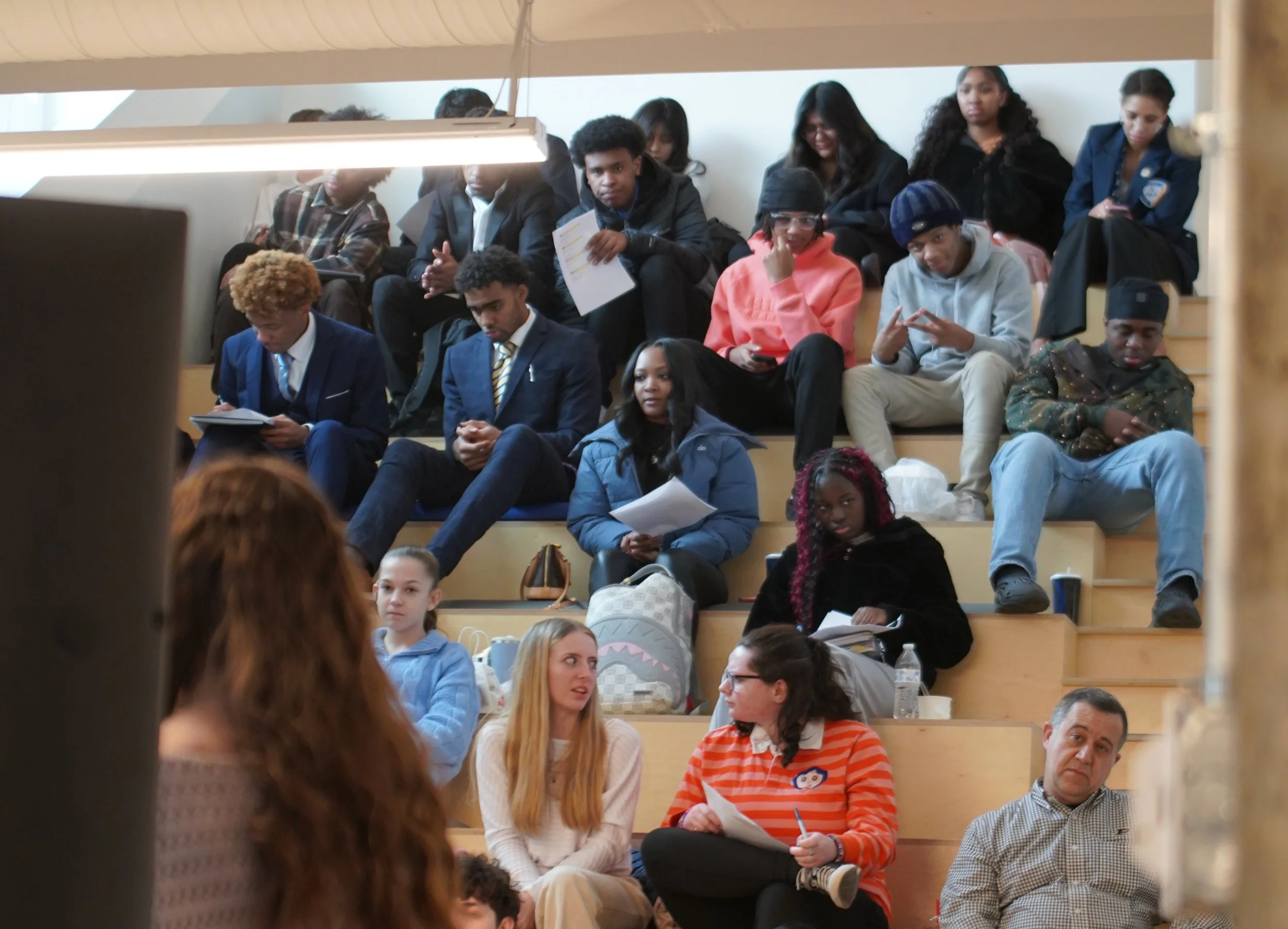
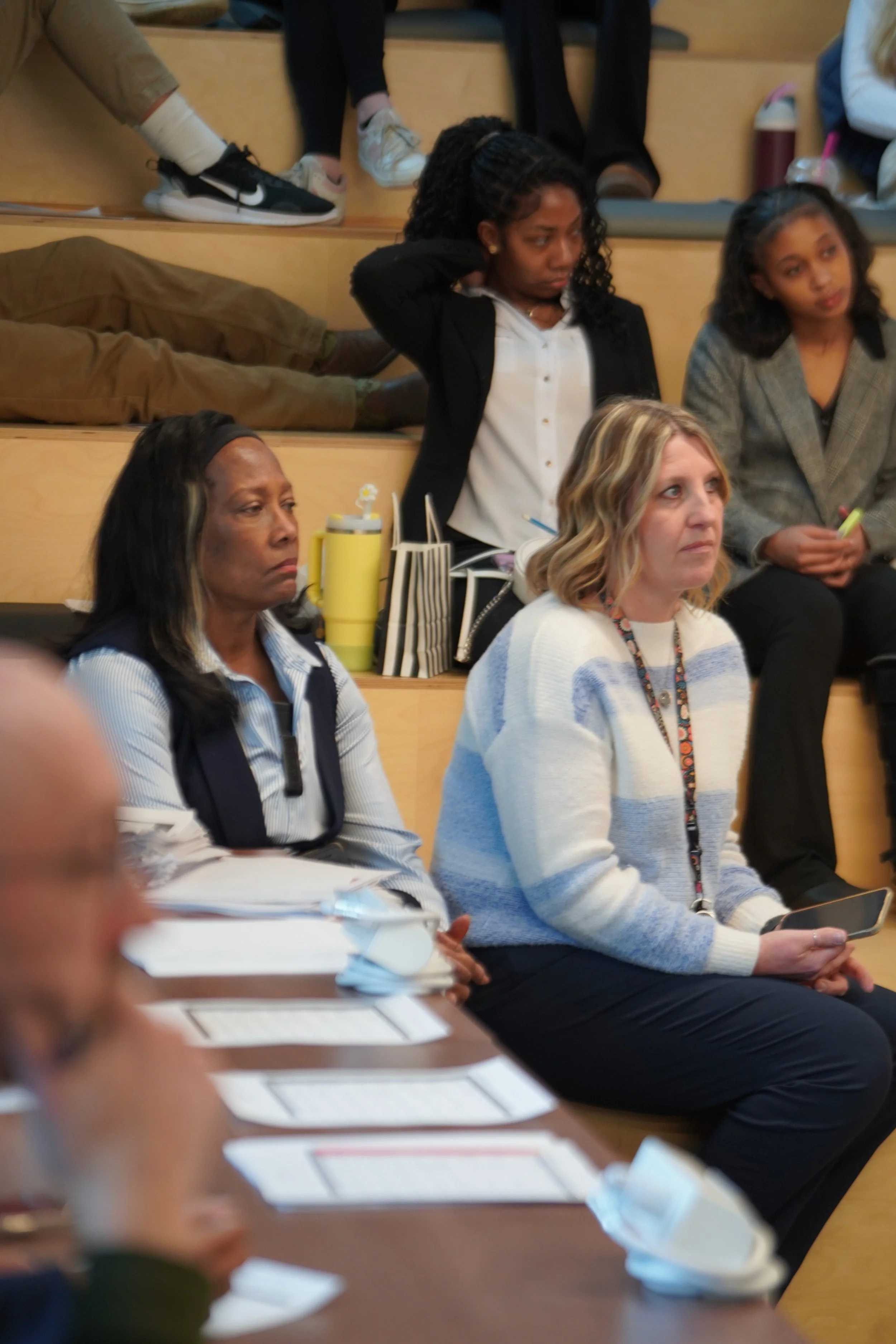
Organized by Sonia Walker of McKenzie Career Center, the multi-school pitch practice event brought together approximately 80 students from five high schools, representing a wide range of grades, programs, and stages of idea development. Over the course of the day, students delivered nearly 60 pitches, receiving feedback from judges, mentors, and STARTedUP staff in a setting designed to build confidence, not crown winners.
“I organized this event so students could practice and gain confidence in their business ideas,” Walker explained. “Even though we’re separated into teams and regions, we’re all working toward the same goal to help our students.”
That shared purpose shaped the tone of the day. Rather than competition, the event felt collaborative. Teachers cheered for students from other schools. Students compared nerves, notes, and ideas. And no top pitches were announced.
“I think it was good that we did not call the top students but empowered all to continue their ideas,” Walker said, “…It is not always about an immediate win.”
Reuben Benzel from Herron High School noticed that same spirit of shared momentum across schools. “Seeing peers respond to each other's ideas was the highlight of the day,” Benzel said. “…A highlight for me was watching one of my students stay 30 minutes after the competition talking with other teams from other schools about their ideas and what they liked about them…”
Moments like that captured what made the event different. Students were focused on learning from one another, rather than outdoing the competition.
A Different Kind of Audience
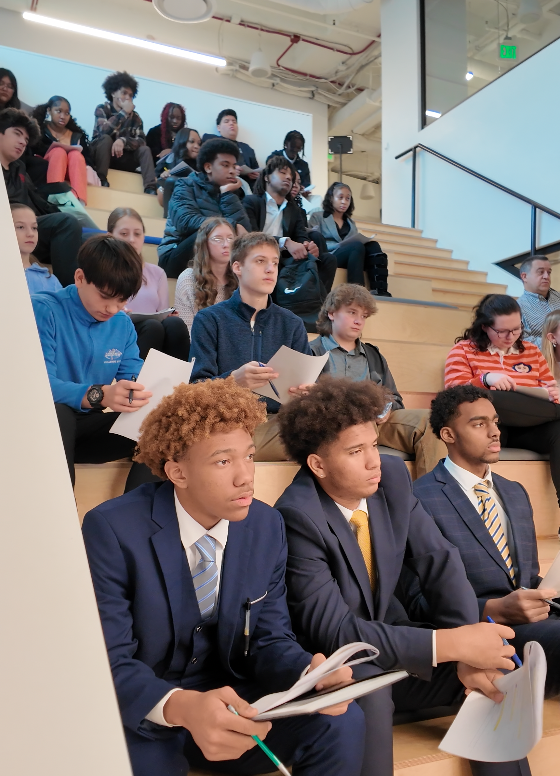
For many students, this was their first time pitching outside the familiarity of their own classroom. Sarah Ackerman brought 19 students from Speedway, representing 11 business ideas, and immediately noticed a difference.
“What stood out to me most when watching students present was how passionate they all were,” Ackerman said. “Most had a personal connection to their problem and all showed tremendous motivation to solve it!”
That passion carried into how students engaged with feedback. Judges asked thoughtful, challenging questions, and students eagerly captured notes to revisit later.
“My students LOVED the feedback and questions from the judges!” Ackerman shared. “They were giving them thought-provoking questions and a lot of great advice that my students are already using to revamp their products!”
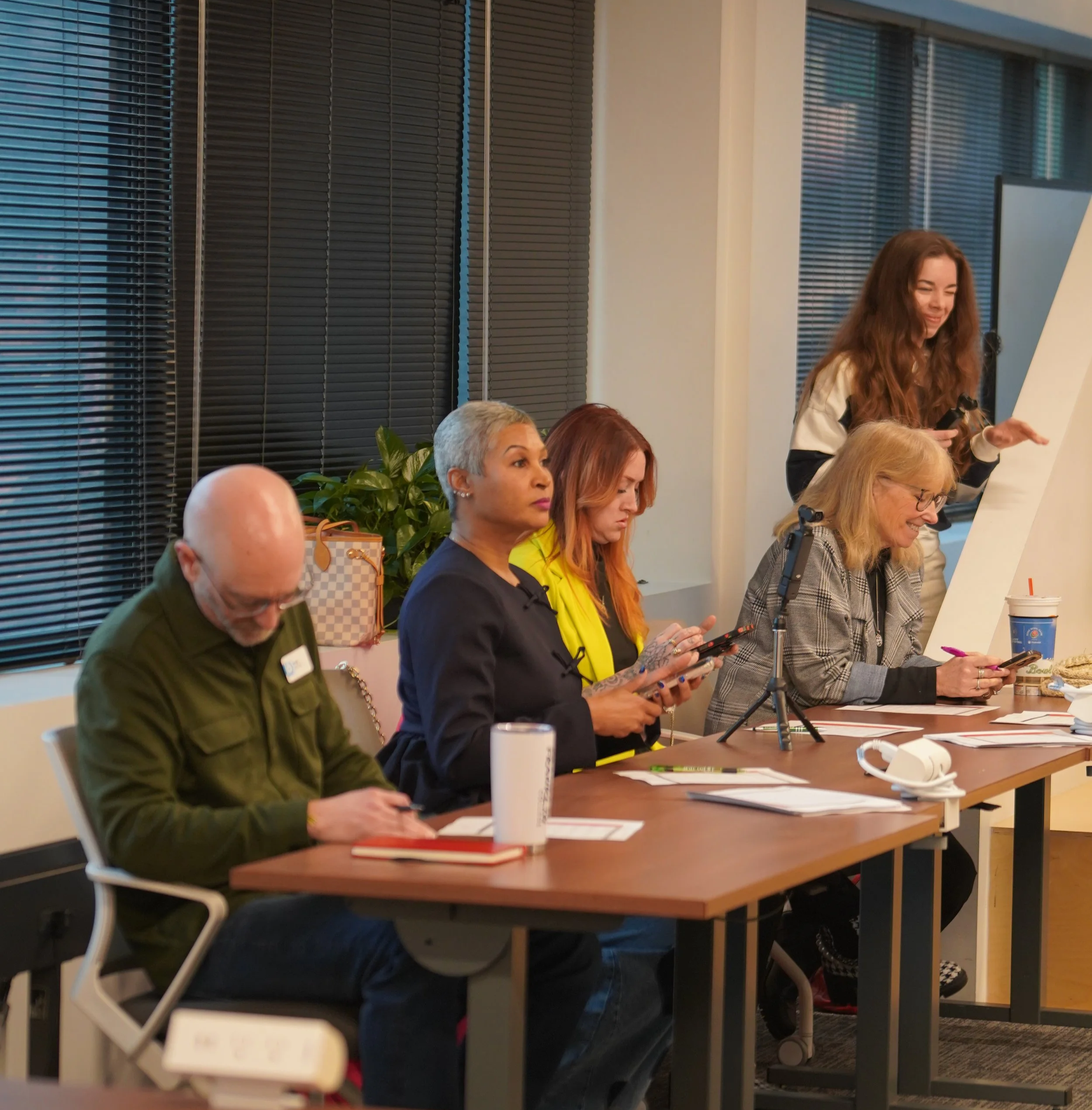
Meredith Bryant, who brought nine students pitching eight ideas, observed similar growth, even as nerves surfaced early on.
“My students are very comfortable pitching in front of their own classmates, but when they first saw the size of the audience and the panel of judges, many were understandably intimidated,” Bryant explained. “Watching them push through that initial discomfort and still deliver strong pitches was incredibly rewarding.”
What stood out most for her came from observing students learn from one another.
“They had several “wow” moments when they saw the level of professionalism and preparation demonstrated by students from other schools,” Bryant said. “They were genuinely stunned by the caliber of presentations and left with a new understanding of what excellence looks like.”
Learning Outside the Echo Chamber
Jeff Edge from Purdue Polytechnic High School Lab brought five students pitching three businesses, and for him, the power of the day came from exposure — to new ideas, new people, and new perspectives.
“What stood out most to me was the sheer diversity in problems these students are trying to solve,” Edge said. “From car repair to heated football gloves to a better nail salon to a community-based boxing school…”
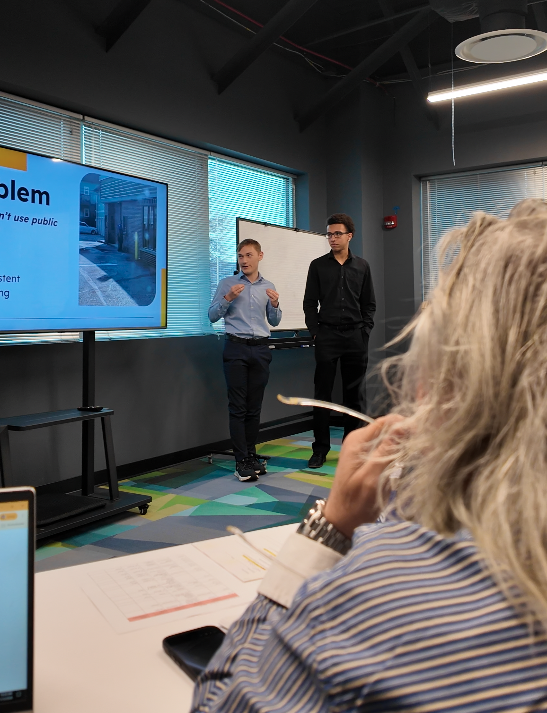
That diversity extended to the feedback students received from judges.
“The judges were outstanding!” Edge noted. “What one judge loved, another disliked. It teaches students they have to evaluate feedback critically. There may be no right answer.”
It’s a dynamic that’s difficult to replicate within a single classroom.
“Entrepreneurship is a journey about hearing ideas and feedback that are different from your own,” Edge added. “You can’t live in an echo chamber in this process. Kids need to hear from judges and other students who have no vested interest in their idea.”
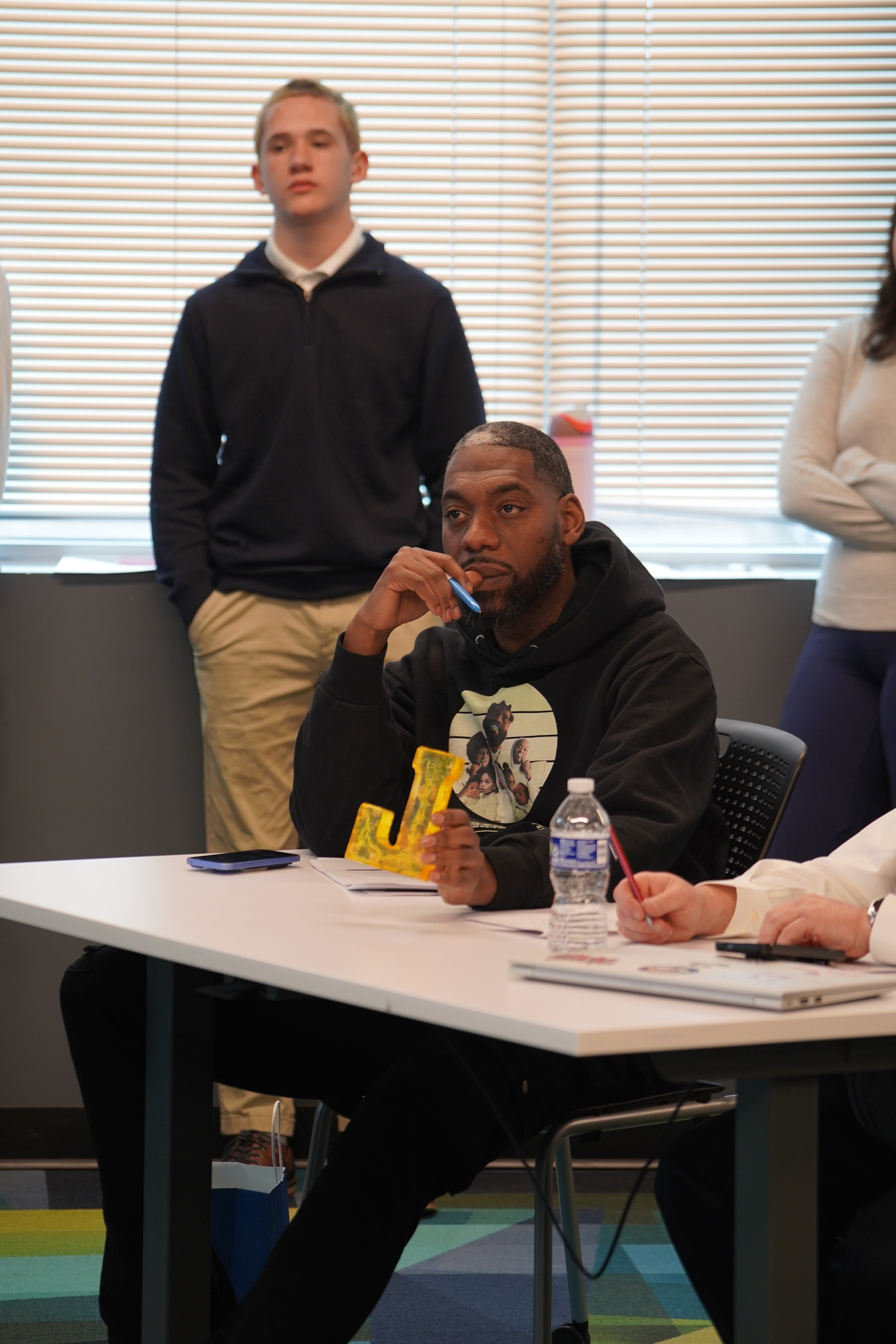
Across schools, teachers observed similar confidence shifts. Students who arrived nervous relaxed as the day went on. Some realized pitching wasn’t as intimidating as they feared. Others gained confidence simply by seeing peers at earlier stages of the same journey.
Mentorship in Action
The impact of the day was also shaped by volunteers who showed up not just to evaluate ideas, but to invest in students as people.
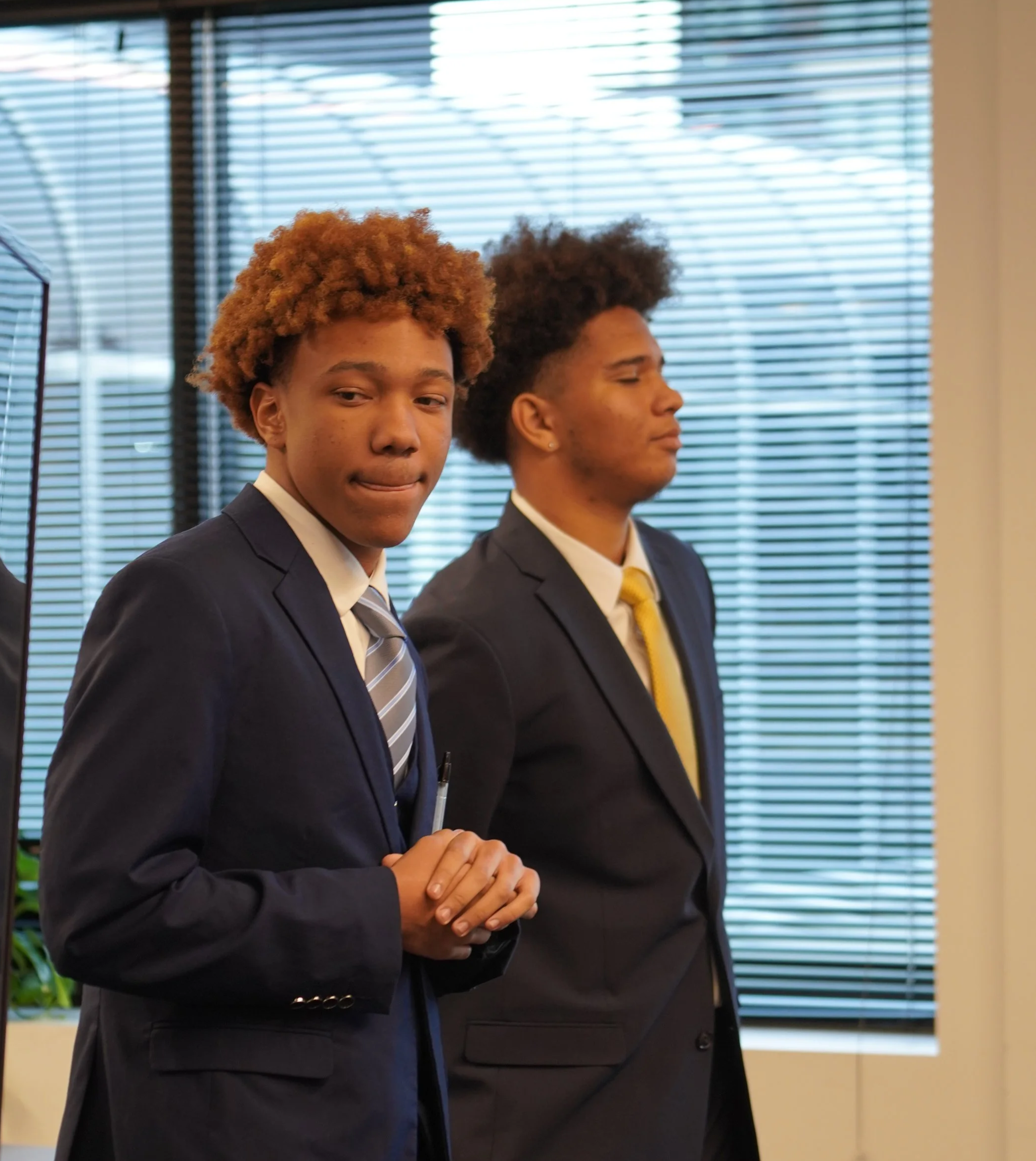
Mark Harsley, Founder & CEO of KiteMailApp, served as a judge at the event and even brought along photographer Greg Ash to offer headshots to students, a very meaningful gesture that helped students begin to see themselves as professionals.
For Harsley, the experience was deeply personal.
“It was such a rewarding experience to judge the pitch competition and witness students I mentored toward the end of last year grow so much,” he shared. “Watching their growth firsthand reinforced for me the importance of mentorship and the incredible potential young entrepreneurs have when given guidance and opportunity.”
Practice Without Penalty
What made the event especially powerful was how it was framed. This was a practice space, not a competition that determined advancement.
“Presenting in front of other schools in a workshop-type setting gave them the chance to fail first without it being detrimental to their position in the competition,” Ackerman explained. “This experience allowed them to get outside their comfort zone, present to those who knew nothing of their product, and gather feedback.”
The result was immediate. Students returned to their classrooms energized, reflective, and ready to improve.
“Every student who presented returned the next day energized and ready to improve,” Bryant said. “…many were eager to begin refining their ideas immediately. Their openness to critique and motivation to take their projects to the next level showed remarkable maturity and growth.”
The result was immediate. Students returned to their classrooms energized, reflective, and ready to improve.
“Every student who presented returned the next day energized and ready to improve,” Bryant said. “…many were eager to begin refining their ideas immediately. Their openness to critique and motivation to take their projects to the next level showed remarkable maturity and growth.”
Building Toward What’s Next
For educators, the day reinforced why opportunities like this matter, especially for students preparing for regional competitions and beyond.
“When I was in D.C. with the finalists, students pitched to politicians, influential companies, and highly intelligent tech people,” Edge reflected. “The students’ pitches were excellent because they were given ample opportunities to pitch over and over again.”
Walker noticed something else, too.
“The smiles and networking across the school were the things that stuck out to me,” she said. “Several students were nervous, but it was great for them to see their peers who were feeling the same way.”
At 16 Tech, students didn’t leave with trophies or rankings. They left with feedback, connections, and a clearer sense of what growth actually looks like.
And sometimes, that’s exactly the point.
To Launch Under 30 Days
John Moore: Westfield High School

Sometimes, entrepreneurship doesn’t unfold over a semester or a school year. Sometimes, it happens fast!
John Moore watched one of his students move from an idea to a fully launched business in under 30 days. That student was junior Adrian F. and his business is CleanoutCashin, a professional garage and space cleanout service designed to help homeowners “clean out, and cash in”.
Here’s how it works, CleanoutCashin removes unwanted items from garages and other spaces, responsibly donates or recycles what it can, and resells usable items for customers so they can even earn money from the process. Adrian’s service handles everything: sorting, removal, and deep cleaning; turning a dreaded chore into a streamlined (and profitable) experience.
The idea didn’t stay theoretical for long. Once Adrian landed on the concept, he immediately got to work validating it. He created and distributed a market research survey to Westfield homeowners to understand demand, pricing, and customer expectations. With those insights, he built a website where customers can request quotes and pay online. Then he launched marketing efforts through Facebook and Nextdoor, reaching his target audience directly.
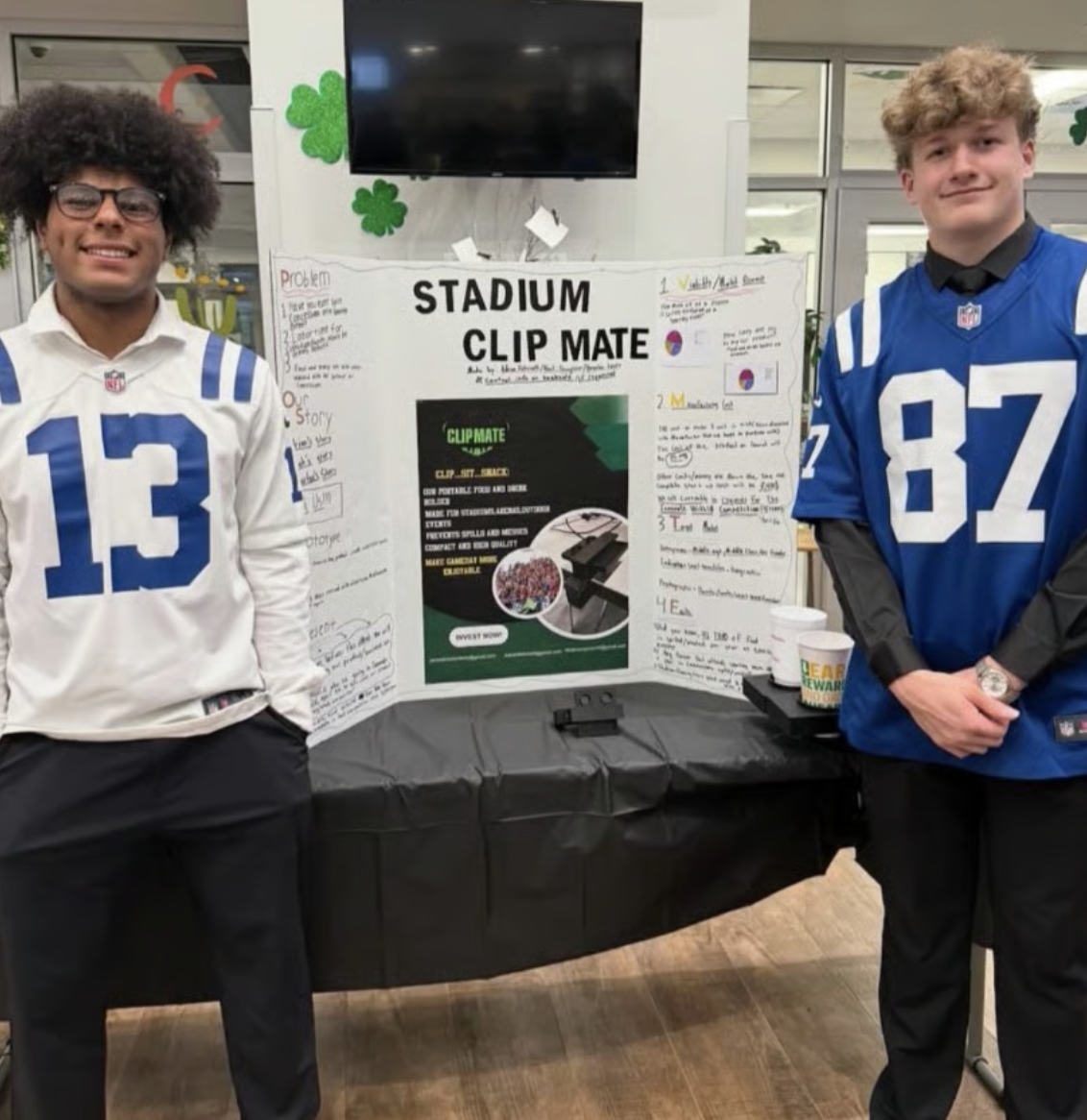
In less than a month, CleanoutCashin was live.
“Adrian is a go-getter,” Moore said. “He did most of this himself. When he gets an idea, he goes for it.”
Moore helped Adrian refine his market research questions, identify the right target market, and think through next steps. He also connected Adrian with a mentor who he has been meeting weekly, Danielle Carey-Tolan, Deputy Mayor of Westfield.
When Adrian realized he had actually launched his business, the reaction was a mix of pride and determination. He understands that the early stages require some real heavy lifting (pun intended), but he’s already thinking ahead. His long-term vision is to grow CleanoutCashin to the point where he can manage operations and hire his friends and football teammates to handle the cleanouts themselves.
For Moore, the growth he’s seen in Adrian goes beyond revenue or traction.
“This experience has given him more confidence in his abilities and motivated him to keep moving forward,” Moore said. “His business last year did well in competitions, but… he was quick to pivot, and now he’s already planning how to grow.”
That willingness to pivot is what makes this story stand out. Adrian didn’t wait for the perfect version of his idea. He tested, adjusted, launched, and kept going. If Moore had to sum up his pride, it’s simple: “I’m proud of Adrian for having the courage and tenacity to turn an idea into action and take the risk to build something that can help many in our community.”
At Westfield High School, CleanoutCashin is proof that when students are given the space to move fast, take risks, and own their ideas, innovation launches!