
Innovation In Action
Each month, we celebrate the stories of Innovation Accelerator teachers and students making a difference across Indiana and beyond.
Quick Hits:
A Hobart High School teacher presented a leadership workshop at the United States Hispanic Leadership Institute's national conference, introduced by her 16-year-old daughter.
Engineering students at Hanover Central built physical prototypes for two student businesses and solved a culinary teacher's sink problem, with a batch of homemade cookies on the line.
"You Are Not Busy. You Are Building."
Valentine Torres: Hobart High School
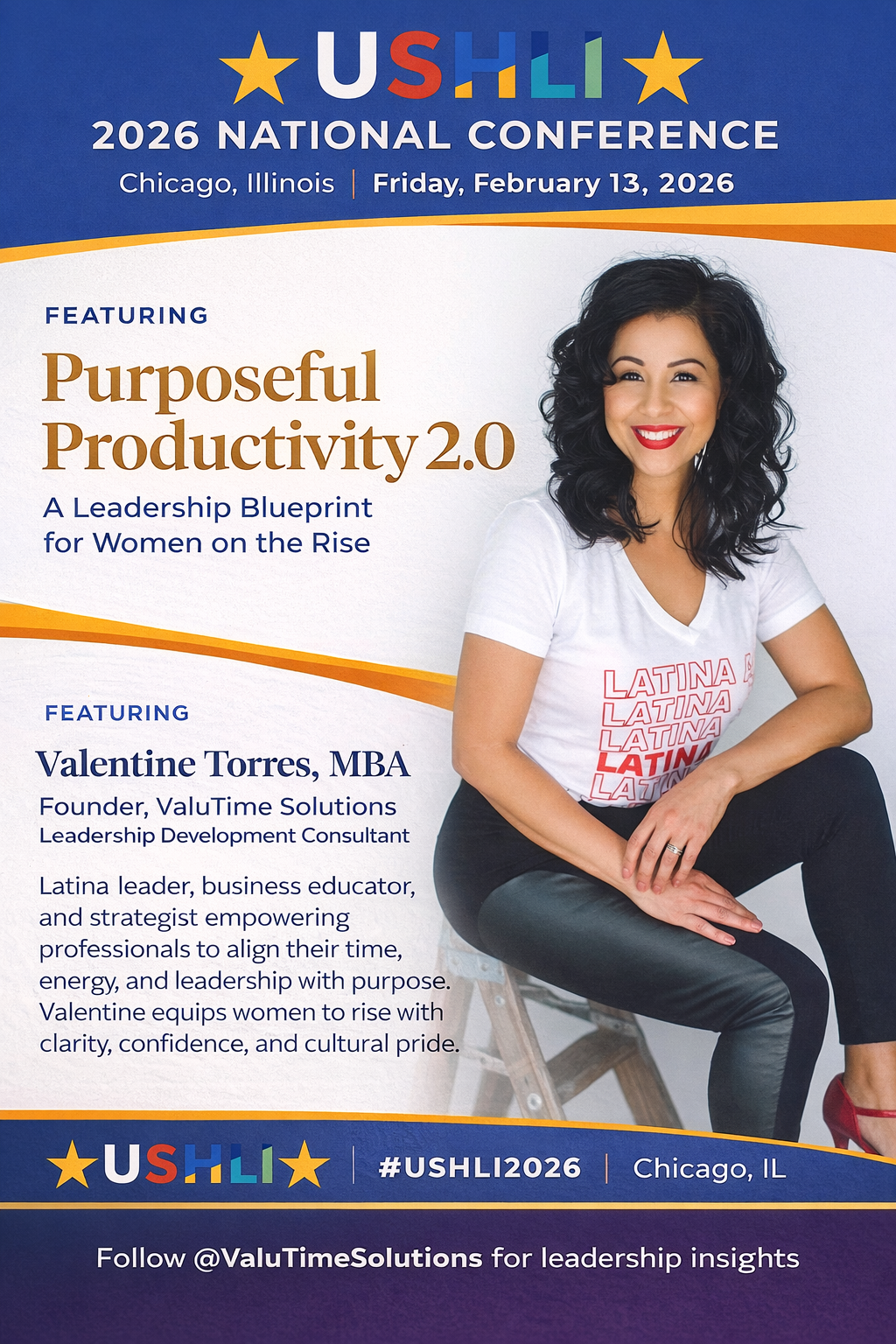
Valentine Torres has a phrase she gives her students when the pace of school, life, and ambition starts to feel like too much: "You are not busy. You are building."
In February, she delivered that message on a national stage.
Valentine was invited to present an interactive workshop at the United States Hispanic Leadership Institute (USHLI) annual conference, a national organization dedicated to developing Latino leaders across education, business, and public service. Her session, titled "Purposeful Productivity 2.0: A Leadership Blueprint for Women on the Rise," was designed for young professionals and emerging women leaders, focusing on aligning time, energy, and leadership with personal values and long-term goals.
At the heart of the workshop was a framework Valentine calls the Staircase Method, which is a Yes Strategy that encourages leaders to be intentional about what they commit to, so that every step forward contributes to long-term growth rather than short-term noise. The shift she challenges participants to make is from reactive busyness to deliberate, values-driven action. "You are not busy. You are building,” Torres says. “The key is making sure what you are building aligns with who you are becoming."
One of the most meaningful moments of the experience had nothing to do with the stage. Valentine's sixteen-year-old daughter, Liliana, attended the conference alongside her. Liliana introduced Valentine to the audience, reading her bio and closing with five words: "And she is my mom."
"It was a full circle moment that reflected exactly why this work matters," Valentine said. "Leadership is not just something we teach. It is something we model."

That philosophy carries directly into her classroom. For Valentine, purposeful productivity is how she approaches entrepreneurship, business strategy, and innovation with students every day. When teachers show up on national platforms and bring the next generation into the experience, it sends a message to students that their voices and ambitions extend far beyond their school's walls.
"It models preparation, professionalism, and courage," she said. "It also allows me to bring back fresh insights and networks directly into our learning environment."
As a Latina educator and leadership consultant through ValuTime Solutions, being invited to USHLI affirmed something Valentine already knew but is always glad to hear reflected back: the work she does in the classroom is part of a much larger conversation about leadership, representation, and opportunity.
Building the Bridge Between Engineering and Entrepreneurship
Mary Albrecht: Hanover Central High School
This year, Mary Albrecht's engineering students did something that doesn't usually show up in a traditional engineering class: they built prototypes for their classmates' businesses.
When colleague Chris Fleming had two Innovation Accelerator students who needed physical prototypes developed, Mary brought the challenge to all three levels of her engineering program (Intro to Engineering, Principles of Engineering, and Civil Engineering) and opened it to the floor.
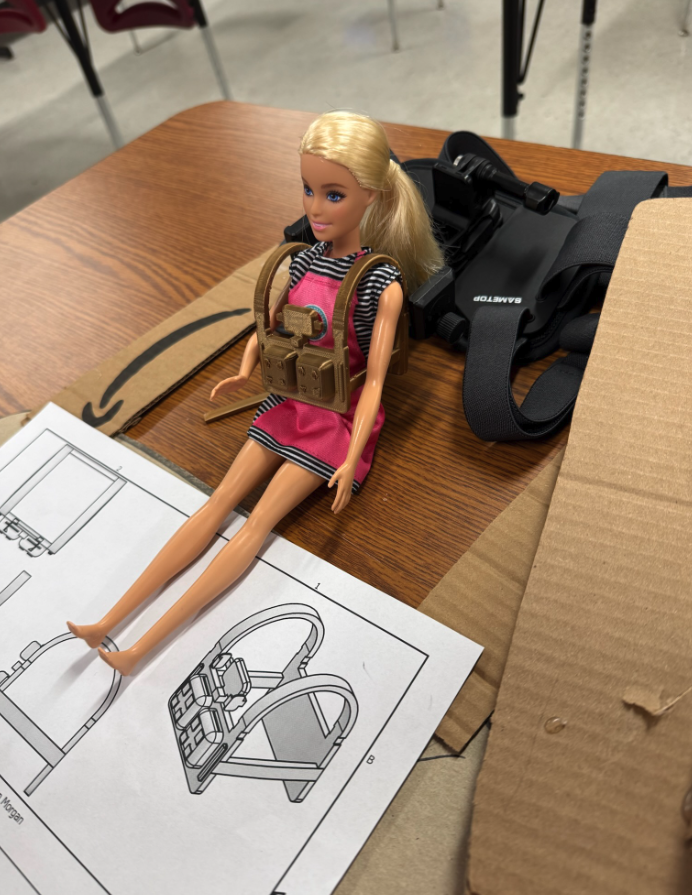
The two projects were as different as they come. The first: a baseball helmet with retractable sunglasses. Students dove into cardboard builds and 3D design concepts, producing a small working model of the retractable mechanism. The second: a custom equipment vest for MTK Detailing, a student-run car detailing business. The vest needed to hold a phone, tools, and equipment; something functional enough to wear on the job.
Students produced multiple cardboard vest prototypes, then one student took it further: a 3D-printed version of a modular attachment piece. Since the vest itself needed to be fitted to a person, Mary improvised by tracking down a doll from an art teacher to model the scaled-down printed prototype. When Kyle presented, a classmate was able to step in to model the a life-sized version of the vest.
A Sink, a Robotics Class, and a Batch of Cookies
Around the same time, a different kind of problem crossed Mary's desk.
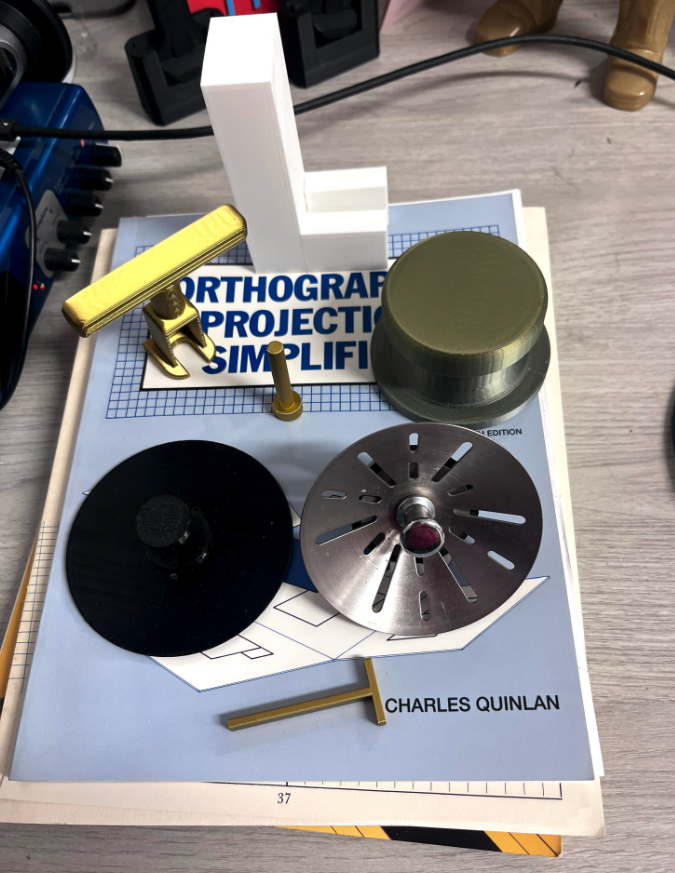
The culinary teacher down the hall had a sink with too much suction. When the water got too full, the drain sealed shut and couldn't be opened without prying it with a tool. She mentioned it to Mary, who saw an opportunity for her robotics class.
The students designed solutions and the culinary teacher tested them, then wrote each student a personal note with her feedback. The winning design (created by the same student building for MTK) was elegantly simple: a small attachment that fits over the drain, giving the teacher a handle she could lift with her hand.
The prize? A homemade batch of cookies from the teacher herself!
Laying the Foundation for What's Next
Mary is already thinking ahead. The same students she has now, she'll have again next year, and by then, she wants engineering and entrepreneurship to feel less like two separate worlds.
She and Fleming are already talking about syncing their class schedules so their students can present to each other simultaneously. Mary's vision: an engineering student who doesn't need to build a whole business plan, but sees a problem in Fleming's class and says, I could design a prototype for that.
"My hope is for students to see the connection between engineering and entrepreneurship," Mary said, "and see that they can create something that could end up being a successful business or a successful pitch."
The foundation is being laid, one cardboard prototype at a time.